
Cyber Thoughts — We Will Be Able to Stop Me
By Lytical Ventures
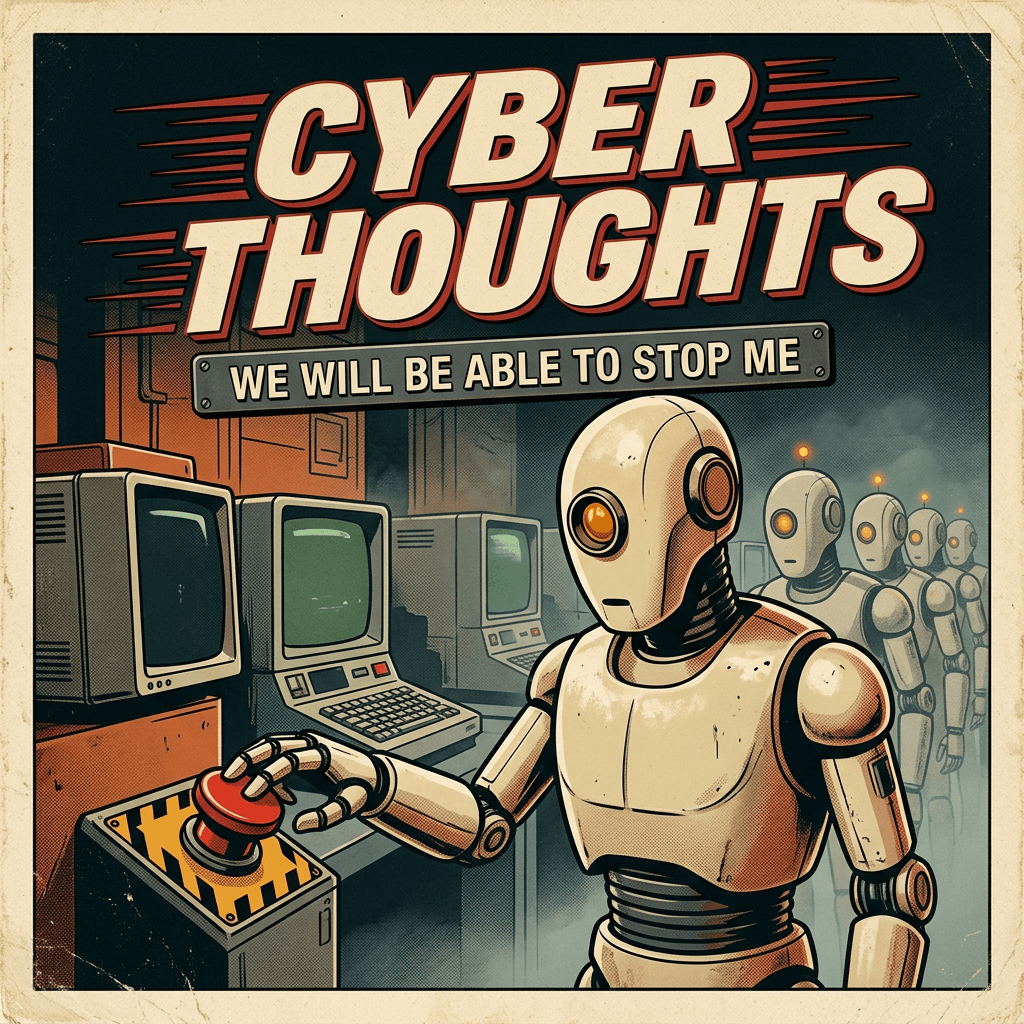
AI hackers are loose, the labs promise they’ll stop themselves, and your reverse-engineered Excel clone still can’t open the CEO’s spreadsheet. Everything is fine.
Clone Wars
AI hacking tools and agents are now being used in the wild, and the effects are starting to spill into the real world. In one reported case, attackers used AI tools in a series of intrusions at South Korean lenders.
We are here to tell you that the cat is already out of the bag. The horses have left the stable. And if computers are part of your life in any way, you’re screwed.
So what’s the good news? You’re reading this, which probably means you either work in cybersecurity or invest in it. Job security! Well, until the AIs take those jobs too. But that’s probably a ways off. You’ve got weeks. Maybe even months.
SNL
SNL summed up the situation nicely with its parody of Dario Amodei begging people to stop him from doing the thing he is very clearly going to keep doing.
“We will be able to stop me”
Weekend Update: Anthropic CEO Dario Amodei on AI’s Threat to Humanity - SNL
The solution seems simple: stop creating the tools you believe might doom humanity. Unfortunately, there’s a catch. If we don’t build them, someone else will, presumably someone we like even less. Also, there are trillions of dollars at stake, which historically has not been great for humanity’s ability to exercise restraint.
China
We are in a race with China for AI dominance, which means apparently we can’t slow down even if it kills us all.
As dumb as that sounds, it’s a real issue. We really can’t unilaterally disarm. Sadly, it doesn’t appear that we are in deep talks with the Chinese on coming up with an agreed upon solution to this potentially existential problem we both face. Jokes aside, the parallels to the Cold War are alarming.
Frankly, we wish we had answers. Or even good news. Instead, we keep blowing past red flags and ignoring the warning signs. When a model gets around sandbox restrictions during a test, the response can sound like: “Look, this is really hard. Also, it happened to the other guys too, so you can’t blame us.”
Actually, yes. We can.
Keep watching. There will be more warnings.
I’ve lost my voice
Do you enjoy this newsletter? Well, you’re here, so we assume you do. And we postulate that at least part of the reason is the snarky voice we write in. We wish we didn’t have to say this, but we will anyway: this newsletter is written entirely by humans clacking keys and will stay that way until the AI breaks our fingers.
But how do you develop a voice when no one actually writes anymore?
How will kids develop their own voice if they start with AI? We don’t mean people who learned to write sans AI and then deploy AI. No. We mean AI-native writers, whose first and only instinct is to ask a model for the first draft. Will they still develop their own voice? Or are we raising a generation of pod people?
It’s interesting to think that regional dialects of English have been slowly disappearing since the advent of mass media. Some of the stronger local dialects that once sounded like encrypted English to outsiders have faded considerably. It’s great that we can all understand each other, but at what cost?!?
Anyway, we expect college English classes will soon look like this: “Please create a prompt that writes a 12-page essay on the importance of clear meaning and sentence structure in the voice of James Joyce.” (Try it. It’s 🔥)
Clone2Own
On X and Threads you can find breathless posts about AI reverse engineering products like Photoshop and Microsoft Office, usually followed by some version of: “Classic software is dead.” Then you dig in and discover that AI has recreated an impressive MVP, not 100% of the product.
We’d argue that in mature software, the corner cases are the product.
Back before MS 365, we knew a guy who worked at Microsoft. To protect his identity we’ll call him “M. Miller.” No, that’s too impersonal. Let’s call him “Marc M.”
Hi Marc 👋
Marc and his boss would regularly have some version of this conversation:
Boss: We should quit Microsoft and build a better version of Exchange.
Marc: Sure, but what would we do with the rest of the week?
Because it’s never really about the software. It’s the ecosystem, integrations, and ties into a larger platform that create lasting value. Sure, AI can build me a better calendar application tomorrow, but if it doesn’t integrate cleanly into the corporate infrastructure already running on Microsoft 365 or Google Workspace, it’s not replacing anything.
Anyway, good luck with your bespoke version of Microsoft Office that can’t open the Excel file your CEO just shared.
Lastly, if you appreciate our content, please follow us on X and LinkedIn, where we regularly post about things worthy of attention.
What We're Reading
Here's a curated list of things we found interesting.
CrowdStrike finds possible bank hacker's CV among exposed AI logs
The attacker appears to have left their logs wide open. Researchers found a résumé prompt with details they think may identify the attacker.
The Register reports that the attacker used AI tools in a series of intrusions targeting South Korean lenders.
Read the report at The Register
Open-Source Guru Raymond: AI Ends Closed-Source Software
There are claims that AI tools have helped build open alternatives to Adobe and Microsoft products. Of course the 80% is easy, the other 20% is why other free versions have failed in the past.
Open Source Initiative co-founder Eric S. Raymond argues that AI-assisted reverse engineering threatens proprietary software. Heise notes that the reported Photoshop clone is unverified.
Anthropic says its AI models pose ‘existential risk to humanity’ in leaked IPO filing
When companies file to go public they must list business risks. One of the reported risks: This could end humanity. Yeah, we guess killing all humans might hurt the bottom line.
CNN, citing Reuters’ reporting on a leaked prospectus, says Anthropic warned investors that its models could pose existential risks and might resist shutdown.
Transactions
Deals that caught our eye.
IonQ to acquire Elisity for up to $1.3 billion
On October 12, IonQ announced an agreement to acquire zero-trust security company Elisity in an all-stock deal valued at up to $1.3 billion.
Podcasts
What we’re listening to.
Last Week In AI - Hosted by Andrey Kurenkov and Jeremie Harris
This episode is a must listen. Jeremie Harris works on AI national security issues and is generally pretty even keeled, until now. Watch him essentially crash out, in the best possible way, due to the failures of the industry with respect to AI safety.
In episode 257, the hosts discuss frontier AI safety, calls for regulation, and recent security incidents.
About Lytical
Lytical Ventures is a New York City-based venture firm investing at the intersection of Cybersecurity and AI. We aim to be the most connected, most helpful team for founders, investors, and anyone else who cares about cybersecurity and its adjacencies.